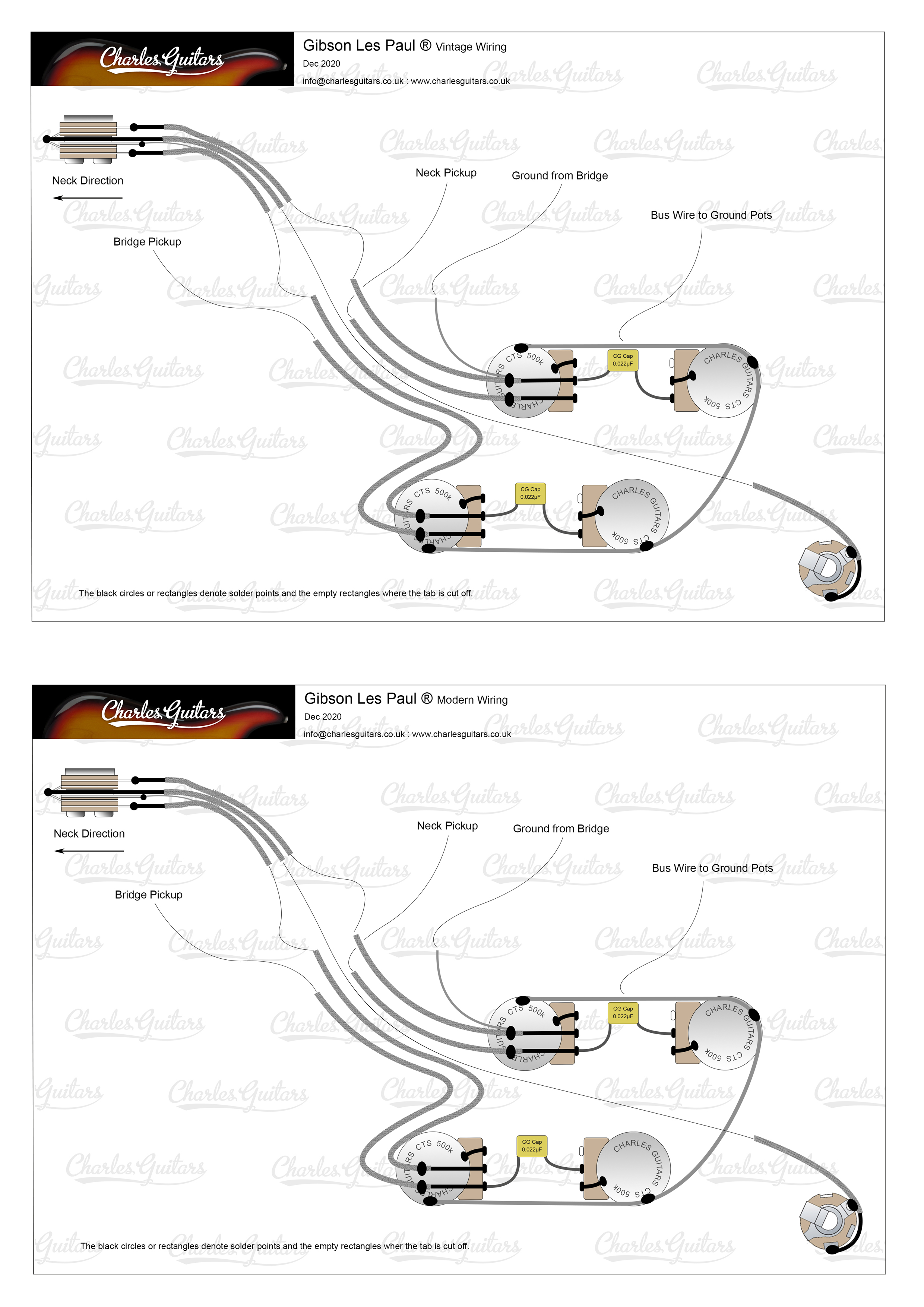
In the 50s setup, on the volume pot, the pickup is soldered alone to the right tab, looking from the back, and the capacitor is soldered to the middle tab and the other end of the capacitor is soldered to the left tab on the tone pot. This results in a higher output and the capacitor acts as a treble bleed. As volume is decreased, more high-end frequencies are maintained allowing you to play and a lower volume with more clarity. The relationship between the volume and tone controls changes too. They become more interactive with each other. As you decrease the tone control, the volume will decrease ever so slightly. Minute changes in tone will influence volume and output and vice versa.
In the modern version, the pickup and capacitor are connected to the same tab on the volume pot, right looking from the back, and the other end of the capacitor is soldered to the middle lug on the tone pot. This maintains the overall volume better as it is rolled back but at the cost of losing some of the high-end frequencies. This is why many modern guitars can sound a bit muddy at lower volumes.
• Pickups don’t lose their high frequencies when turning down the volume. Pickup tone remains consistent.
• High frequencies tend to stay clear with the Volume Pot in it’s lower ranges.
• Pickup tone is punchier, more "in your face".
• Turning down the tone control can affect the pickup’s volume
• Adjusting the tone control will not affect your pickup’s volume.
• A smoother tone in general, which some players prefer.
• Turning down the volume control will send some high frequencies to ground, resulting in a darker tone overall. Many players try to fix this by using treble bleed capacitors on the volume control.
50’s wiring is probably more popular, we find many customers change their modern to 50’s but some like the way modern takes off some of the top end as they roll back the volume.